
Most items on this list take five minutes or less. Work through each appliance in order, record what you’ve done, and you’ll head into summer with far fewer surprises.
1. Refrigerator
Summer heat forces your fridge to run longer cycles and work harder to maintain safe food temperatures. A few targeted checks in spring reduce that burden significantly.
- Vacuum the condenser coils. Dust, pet hair, and lint accumulate on the coils beneath or behind the unit over a full winter of indoor heating. Unplug the refrigerator, locate the coils, and use a vacuum with a brush attachment to clean them thoroughly. Dirty coils make the compressor work harder, shortening its lifespan and raising your energy bill.
- Test the door gaskets. Close a single sheet of paper in the door and attempt to pull it free. If it slides out without resistance, the gasket is no longer sealing properly. Wipe the entire gasket with a damp cloth and mild dish soap—built-up grease and food residue are often the culprit. If the seal remains weak after cleaning, replacement is straightforward and inexpensive.
- Clear the drip pan and drain tube. The drip pan at the base of the unit collects condensation and debris. Remove it, rinse it clean, and check that the drain tube feeding into it isn’t clogged. A blocked drain causes water to pool inside the fridge cabinet, which leads to odours and potential mould growth.
- Replace the water filter if applicable. Refrigerators with ice makers or water dispensers require a new filter roughly every six months. A clogged filter restricts flow, produces cloudy ice, and can affect water taste. If you last changed it in fall, spring is exactly the right time.
2. Washing Machine
Summer generates laundry at a different pace—beach towels, sports gear, gardening clothes. Catching a potential failure now is far better than discovering it mid-load.
- Inspect inlet hoses for cracks or bulging. Turn off the water supply and examine both the hot and cold hoses at the back of the machine. Run your fingers along the length of each hose. Soft spots, surface cracking, or any bulging near the fittings are signs that replacement is overdue. Plumbing professionals and appliance technicians consistently recommend replacing rubber inlet hoses every five years regardless of visible condition—a burst hose can release a significant volume of water before anyone notices.
- Clean the detergent drawer. Pull the drawer completely out of its housing and rinse it under warm running water. Detergent residue, fabric softener buildup, and mould accumulate inside the compartments over winter months. A clean drawer ensures detergent dispenses properly and prevents odours from transferring to laundry.
- Run a drum-cleaning cycle. Most modern washing machines include a dedicated cleaning cycle. Run it empty, without detergent, to flush residue from the drum and internal pipes. This step is particularly important for front-load and high-efficiency machines, which are more prone to biofilm buildup when cleaning is neglected.
3. Dryer
Lint accumulation inside dryer venting is the leading cause of dryer fires in Canada—not a risk worth deferring. Spring cleaning is the logical time to address it.
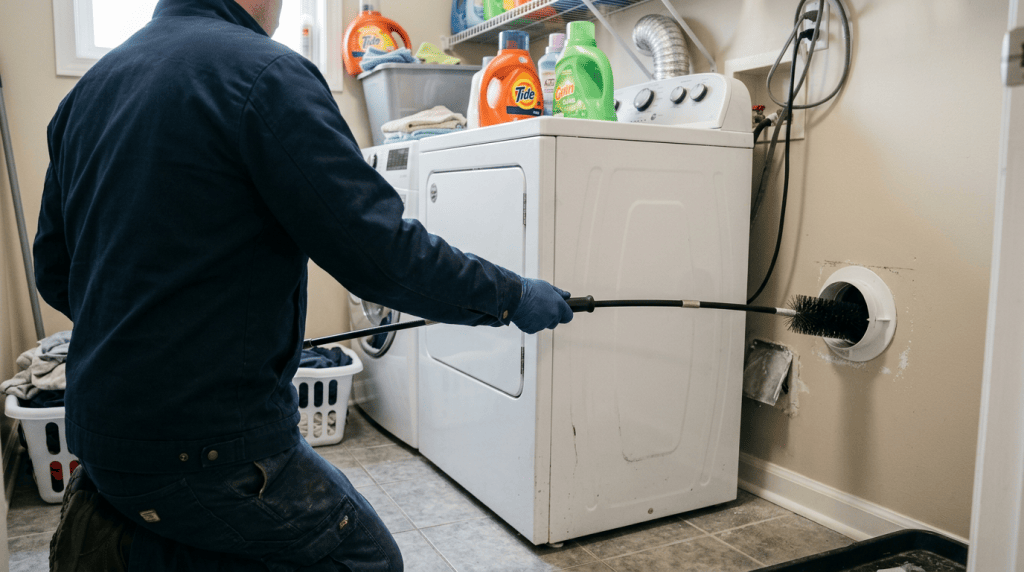
- Clean the vent duct from end to end. Disconnect the vent hose from the dryer and the wall collar. Use a purpose-made dryer vent brush or a vacuum with an extended hose to remove lint from the full length of the duct. For detailed instructions on this process, see our article on how to clean your dryer vent.
- Vacuum inside the drum opening. Remove the lint trap and insert a vacuum with a narrow crevice attachment to clean the slot and surrounding cavity. Lint migrates past the trap screen over time and accumulates in spaces that contribute to overheating.
- Inspect the outdoor exhaust flap. Walk outside to the vent termination point. The flap should swing open freely when the dryer operates and close completely when it stops. A flap that’s stuck open allows cold air, insects, and birds to enter the duct; one that’s stuck closed restricts airflow and increases drying time. Replace any flap that’s bent, missing, or seized.
4. Dishwasher
Hard water mineral deposits and trapped food debris are the main reasons dishwashers underperform. A ten-minute maintenance session restores cleaning efficiency without any special tools.
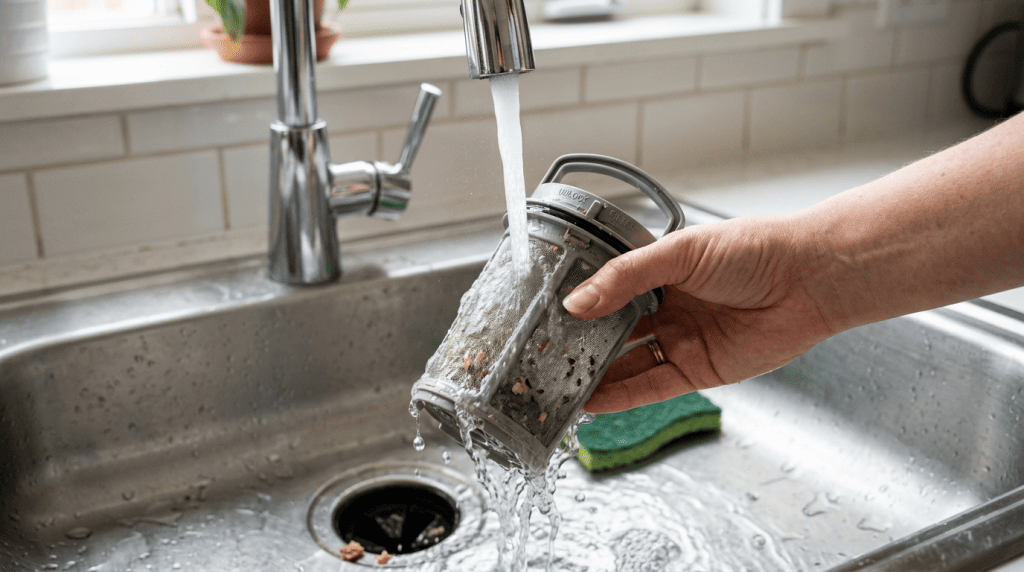
- Remove and rinse the filter basket. Most dishwashers built in the past decade have a cylindrical or flat filter at the base of the wash tub. Twist it out and rinse it under running water, using a soft brush to dislodge trapped particles. A partially blocked filter forces water through the spray arms unevenly, leaving residue on dishes even after a full cycle.
- Wipe the door gasket with white vinegar. The rubber seal around the door perimeter traps moisture between washes, making it a prime location for mould and mildew to develop. Dampen a cloth with undiluted white vinegar and wipe the entire gasket, paying attention to the folds. This both removes existing buildup and inhibits regrowth.
- Run a vinegar cleaning cycle. Place a dishwasher-safe container filled with two cups of white vinegar on the top rack and run a full hot-water cycle with no dishes loaded. This dissolves calcium deposits on the spray arms and interior walls. A follow-up sprinkle of baking soda on the tub floor before a short hot cycle eliminates residual odours. For complete instructions, read our guide on how to clean your dishwasher filter.
5. Oven and Range
Barbeque season reduces heavy oven use for some households, but spring remains the right time to clean burners, verify ignition, and check that your range is operating safely.
- Clean burner caps thoroughly. Remove each stovetop burner cap and soak in hot soapy water for ten minutes. Scrub away baked-on food residue and mineral deposits, rinse completely, and allow to dry before reinstalling. Clogged burner ports produce uneven, weak flames and can cause ignition problems in gas models.
- Replace foil oven liners if present. Foil liners that have become warped, torn, or crumpled can obstruct airflow inside the oven cavity, resulting in uneven baking temperatures. Swap in a fresh sheet now, or remove foil entirely and use oven-safe liners designed specifically for the purpose.
- Test gas ignition on every burner. For gas ranges, light each burner individually and observe the flame. A healthy gas flame burns blue and ignites within a second or two of the knob turning. A weak orange flame, delayed ignition, or a burner that fails to light at all may indicate a dirty igniter, a blocked port, or a gas supply issue. SureFit Appliance Services holds TSSA certification for gas appliances and can safely diagnose ignition and combustion problems if anything seems off during your inspection.
6. Cottage Appliances
If your family owns a seasonal property, appliances there face a specific challenge: months of disuse in a space that may have experienced freezing temperatures, humidity fluctuations, and pest activity. A startup inspection before you rely on them is not optional—it’s essential.
Refrigerators that sat powered down all winter need time to reach stable temperature before loading with food. Water-connected appliances require checks for cracked lines or fittings. Gas ranges at seasonal properties should be inspected for rodent damage to hoses before first use. For detailed guidance on preparing a full cottage kitchen for summer, visit our page on cottage appliance services.
Keep a Home Maintenance Log
A dated record of your maintenance tasks is more useful than it sounds. Note when you replaced inlet hoses, swapped refrigerator filters, or last cleaned the dryer duct. That information helps you stay on schedule—inlet hoses every five years, water filters every six months—and provides documented evidence of upkeep if you ever need it for a warranty claim or a home sale. A basic notebook or a note on your phone works fine. The point is to capture dates and observations while they’re fresh.
When to Call a Professional
The tasks above are designed to be owner-accessible, but appliances sometimes reveal problems during routine checks that go beyond basic maintenance. Unusual odours, grinding or rattling sounds, visible corrosion on hose fittings, flames that won’t stay lit, or any signs of water damage behind or beneath an appliance are all reasons to stop and call a technician rather than continue troubleshooting on your own.
SureFit Appliance Services repairs all major brands across all appliance types. Same-day appointments may be available. SureFit confirms timing after reviewing your request. The diagnostic fee is $85 + HST per appliance—waived entirely if you proceed with the repair, which is $14 below the regional average. Every completed repair carries a 90-day warranty. Book your appointment online at any time, or call us directly at (647) 977-2626.
An afternoon of spring maintenance pays dividends across the full summer season. Work through this checklist methodically, keep a record of what you’ve serviced, and your appliances will be ready for whatever the season demands.
Need Appliance Repair in Ontario?
SureFit Appliance Services covers Keswick, Barrie, Newmarket, Orillia, Collingwood, and 200+ communities across Simcoe County, York Region, and Grey County. Our service call fee is $85 + HST per appliance — waived when we proceed with the repair. All completed repairs carry a 90-day parts and labour warranty.
Call: (647) 977-2626 | Book Online →

Related Services
Need expert help?
If troubleshooting hasn't resolved the issue, same-day appointments may be available across Simcoe & York Region. TSSA-certified technicians handle gas and propane appliance work. Appliance Repair Services → | Book Online | (647) 977-2626
Need Appliance Help? Call SureFit Today
A service-call fee of $85 + HST applies to each appliance diagnosed. If you approve a repair for an appliance, that appliance’s service-call fee is waived. 90-day parts & labour warranty on every job.