
Why Winter Is Hard on Your Appliances
The demands shift sharply once temperatures drop. Your washing machine runs nearly every day with mud-caked snowsuits and heavy wool layers. Your dryer works overtime on thick fabrics that take twice as long to dry. Your kitchen appliances face relentless back-to-back use during holiday entertaining. And if you store appliances in an unheated garage or cottage, cold temperatures introduce an entirely different category of failure.
Starting in December, SureFit Appliance Services sees a measurable surge in emergency repair calls—most of them traceable to issues that a straightforward pre-winter inspection would have caught. The good news is that preventative checks are simple, quick, and far cheaper than a mid-winter breakdown.
Pre-Winter Appliance Checklist
1. Dryer Vent Cleaning—Your Fire Prevention Priority
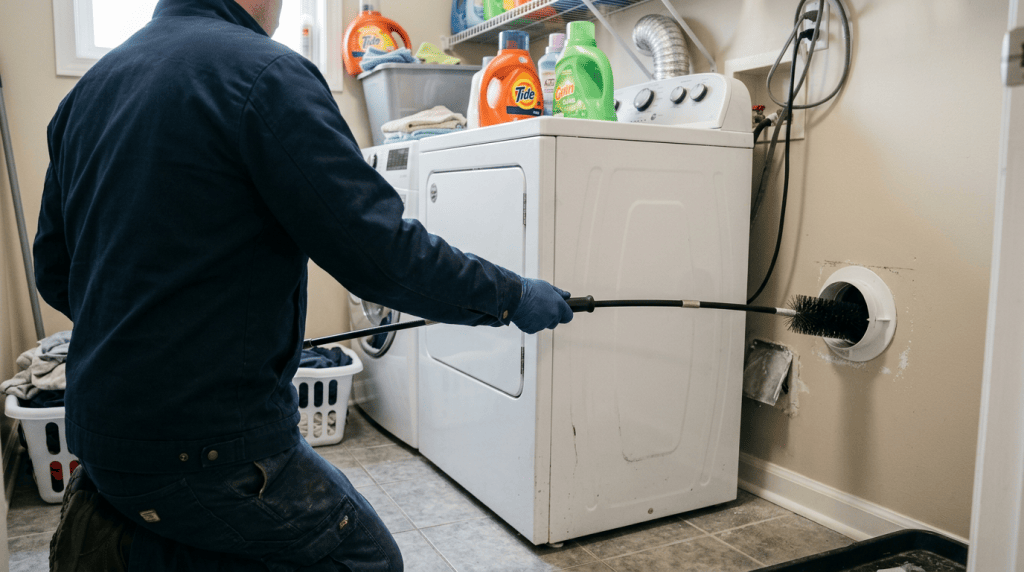
Lint buildup inside a dryer vent is a genuine fire hazard, not just an efficiency problem. Winter is when the risk peaks, because you’re drying heavier fabrics more frequently. A clogged vent also forces the dryer to run hotter than it should, accelerating wear on the heating element, thermostat, and drum bearings.
Pull the dryer away from the wall and inspect the vent hose. Visible lint or noticeably weak airflow at the exterior exhaust cap are both signs that a professional cleaning is overdue. SureFit recommends annual vent cleaning for most households, and twice yearly if you regularly dry heavy loads. Scheduling this in October or November—before the heavy winter drying season begins—is far better than discovering a blockage in January when the dryer runs daily.
2. Washer Hoses—Cold Supply Lines Are More Vulnerable Than They Look
Washing machines tucked into unheated basement corners or chilly laundry rooms face a specific cold-weather risk: water sitting in rubber supply hoses gets cold enough to make the material brittle. Cracks and bulges can develop gradually, then rupture without warning in February—typically when you’re running multiple loads of winter laundry.
Inspect both hot and cold supply hoses for cracks, soft spots, or swelling near the fittings. If the hoses are more than five years old, this is a good time to replace them with braided stainless steel alternatives, which handle temperature swings significantly better than standard rubber. Check that the connections at both the wall shutoff and the machine are finger-tight, with no signs of weeping or mineral staining around the fittings.
3. Refrigerator Temperature Check—The Garage Fridge Problem
This is one of the most common Ontario winter issues SureFit technicians encounter, and it catches homeowners off guard every year. Many households keep a secondary fridge in the garage—extra storage space, a drinks fridge for entertaining—and assume it works the same year-round. It doesn’t.
Most refrigerators are engineered to operate in ambient temperatures between 16°C and 32°C. When your unheated garage drops below 0°C—a certainty in any Ontario winter—the fridge’s thermostat reads the surrounding air temperature and concludes the interior is already cold enough. The compressor shuts off. But the fridge isn’t actually maintaining a safe internal temperature. Food spoils quietly. Beverages freeze solid. You often don’t discover the problem until you open the door.
Check your garage fridge’s operating temperature range in the owner’s manual. Some manufacturers offer cold-weather kits that include auxiliary thermostats and small heaters to compensate for low ambient temperatures. If a kit isn’t available for your model, either move the unit to a heated space for winter or plan to use it only for items that can tolerate temperature swings.
For your main kitchen refrigerator, run a quick temperature test before the holidays: place a glass of water on the middle shelf and check it with a thermometer after a few hours. A properly functioning fridge should hold 4°C or just below. Readings outside that range suggest a thermostat adjustment or service call is warranted before holiday cooking begins.
4. Gas Appliance Ignition Check—Test It Before You Need It
If your kitchen has a gas range, oven, or cooktop, test every burner now—not on December 23rd when you’re cooking for fourteen people. Ignition problems that seem minor in October become genuine stress points during the holidays.
Light each burner and observe the flame. A healthy gas flame is blue and steady, with no yellow or orange tips that suggest incomplete combustion. Watch for delayed ignition, where gas accumulates for a second or two before catching—this is both inefficient and a safety concern. Continuous clicking after a burner is lit usually means a dirty or misaligned igniter. If you detect any gas odour before ignition, or if a burner takes more than one or two attempts to light, schedule a service call before December.
SureFit technicians are TSSA-certified for gas appliance work. A pre-winter ignition inspection covers cleaning igniter components, verifying gas pressure, and confirming safe operation across all burners and the oven cavity—so your holiday cooking goes exactly as planned.
5. Dishwasher Deep Clean and Capacity Check
Your dishwasher is about to face its busiest stretch of the year. Before the holiday entertaining schedule begins, give it a proper reset.
Run an empty cycle with a commercial dishwasher cleaner to clear mineral scale and accumulated food residue from the spray arms and pump. Remove and clean the filter—most slide out easily and rinse under warm water. Check the spray arm holes for clogs by running water through them. Inspect the door gasket for cracks or hardening; a compromised seal reduces cleaning effectiveness and can allow steam to escape around the door.
Then think practically: if you’re hosting multiple large dinners, will you need to run the dishwasher twice a day? Run a test load now to confirm it’s cleaning effectively, so there are no surprises when your kitchen is at full capacity.
Cottage and Seasonal Property Winterization
Seasonal properties in Ontario require a different approach entirely. Appliances left in unheated cottages face freeze damage, not just reduced performance. Water lines in washing machines can crack if residual water isn’t drained before temperatures drop. Refrigerators and freezers in unheated spaces experience the same compressor-shutdown problem described above. Neglecting these steps in the fall often means costly repairs when you return in spring.
SureFit offers specialized seasonal winterization services for properties across the GTA, Simcoe County, Grey County, York Region, and Durham Region—within approximately 200 kilometres of our Keswick headquarters. Visit our cottage appliance services page for details on protecting your seasonal appliances and preparing for spring reopening.
Holiday Cooking Preparation
Three additional checks are worth completing before the holiday season hits full stride:
Oven calibration: If your roasts and baked goods consistently come out overdone or underdone, your oven’s temperature display may not match its actual output. Preheat the oven to 180°C, then place a standalone oven thermometer on the centre rack and check it after 15 minutes. A variance of more than 10–15 degrees warrants recalibration. Accurate oven temperature matters far more during the holidays, when timing is tight and dishes are expensive.
Dishwasher performance: As covered above, confirm the dishwasher is cleaning effectively and the filter is clear before your entertaining schedule begins.
Ice maker function: If your refrigerator has a built-in ice maker, test it now. Confirm it’s producing ice at a normal rate and that the ice bin refills within a few hours of being emptied. A slow or stalled ice maker could indicate a frozen water supply line, a clogged inlet filter, or an electrical fault—all of which are straightforward repairs when handled in November rather than on the night guests arrive.
For additional holiday preparation tips, see our holiday appliance prep guide.
When to Call for Professional Service
If any of these inspections turn up a problem—or if you’d rather have a technician handle the full winterization—SureFit Appliance Services is available across the greater Toronto area, York Region, Durham Region, Simcoe County, and Grey County.
A winter maintenance visit starts at $85 + HST per appliance for the diagnostic, which is $14 below the industry standard of $99. If a repair is needed and you move forward with it, the diagnostic fee is waived entirely. Every repair includes a 90-day warranty on parts and labour.
Our technicians carry experience across all major appliance brands with no brand restrictions. Same-day appointments may be available. Emergency requests are reviewed before scheduling is confirmed.
Book an appointment online, or call us directly at (647) 977-2626.
The Bottom Line
Most winter appliance failures are preventable. An hour spent now checking your dryer vent, washer hoses, garage refrigerator, gas ignition, and dishwasher can eliminate the most common causes of cold-weather breakdowns. Small problems caught in October are inexpensive to fix. The same problems discovered in January—mid-storm, mid-holiday, or mid-laundry day—rarely are.
If your inspection turns up anything that needs attention, act on it before the temperature drops further. Cold weather is coming, and the appliances that keep your household running deserve to meet it in good shape.
Need Appliance Repair in Ontario?
SureFit Appliance Services covers Keswick, Barrie, Newmarket, Orillia, Collingwood, and 200+ communities across Simcoe County, York Region, and Grey County. Our service call fee is $85 + HST per appliance — waived when we proceed with the repair. All completed repairs carry a 90-day parts and labour warranty.
Call: (647) 977-2626 | Book Online →

Related Services
Need expert help?
If troubleshooting hasn't resolved the issue, same-day appointments may be available across Simcoe & York Region. TSSA-certified technicians handle gas and propane appliance work. Appliance Repair Services → | Book Online | (647) 977-2626
Need Appliance Help? Call SureFit Today
A service-call fee of $85 + HST applies to each appliance diagnosed. If you approve a repair for an appliance, that appliance’s service-call fee is waived. 90-day parts & labour warranty on every job.