
Spring Opening: Cottage Appliance Maintenance Checklist
After months of closure, appliances need careful inspection before you load them with food or laundry. Winter damage — from rodents, condensation, and stale standing water — often surfaces the moment you flip a switch.
Refrigerator
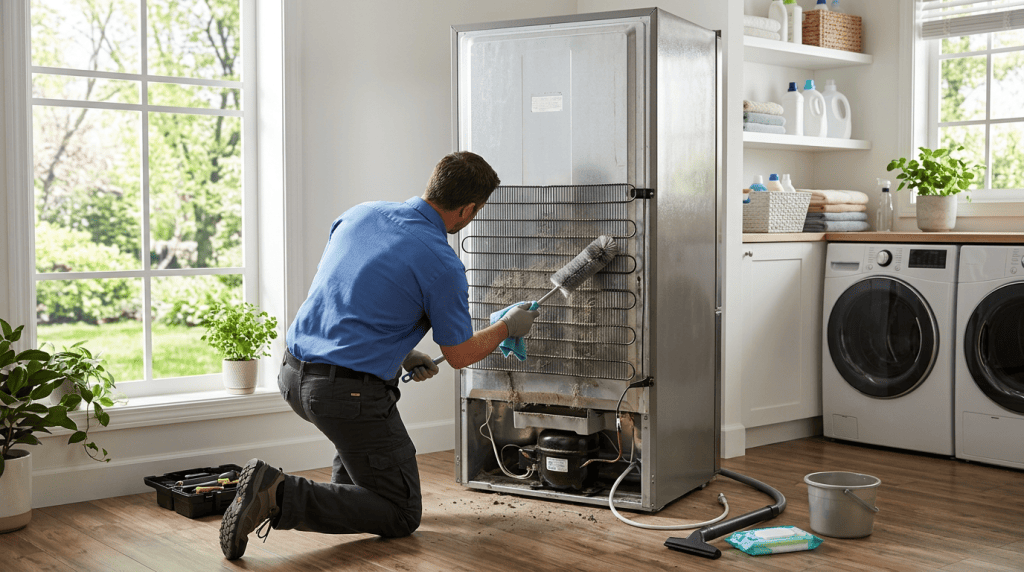
- Inspect door gaskets. Rodents chew rubber door seals. Check for gaps, cracks, or teeth marks around the full perimeter. A compromised gasket forces the compressor to run constantly, driving up energy costs.
- Run empty for 24 hours. Before loading food, let the fridge cycle on its own. This clears stale air and stabilizes the interior temperature to a safe range.
- Test the ice maker. Confirm the water supply line is flowing and that the fill valve opens properly. Frozen supply lines — typically the ¼-inch copper or braided plastic tube behind the unit — are common after winter shutdown.
- Clear the defrost drain. The small drain hole at the rear of the freezer compartment can freeze or collect debris over winter. Pour warm water down it to confirm drainage to the drip pan below.
Washer
- Inspect inlet hoses. Look for cracks, splits, or gnaw marks. Even a hairline crack in a rubber supply hose can burst under water pressure. Hoses older than five years should be replaced proactively — braided stainless steel hoses are the better long-term choice.
- Run an empty hot cycle. This flushes sediment and mould that accumulated in the drum and internal lines over the off-season.
- Inspect the drain hose. Make sure it is neither kinked nor cracked at the connection point. Run water through it manually if there is any doubt about flow.
- Check the drain outlet box. If your laundry area is unheated, standing water in the standpipe or outlet box may have frozen and partially blocked drainage.
Dryer
- Inspect the exterior vent first. Birds and rodents nest in dryer vents during the off-season. Remove all nesting material, leaves, and debris before running the machine. A blocked vent causes overheating — and is a leading cause of appliance fires.
- Clean the lint trap thoroughly. Even if the screen looks clear, use a soft brush to remove compacted lint from the trap housing itself, not just the removable screen.
- Confirm the heating element works. Run a short cycle and verify that heat reaches the drum. No heat typically points to a tripped thermal fuse (part number varies by brand — common codes include F:01 on Whirlpool platforms) or rodent damage to the wiring harness.
Dishwasher
- Run a cleaning cycle. Use a commercial dishwasher cleaner to dissolve mineral deposits and mould from the tub lining and spray arm channels.
- Inspect the spray arms. Make sure the spray holes are clear and that both upper and lower arms rotate freely. Hard water deposits from Lake Simcoe or well water can block the small apertures completely.
- Check the door gasket. Look for mould growth or gaps where the rubber seal meets the door frame. A leaking gasket directs water onto the floor rather than into the drain.
Gas Range or Stove
- Test all burners. Light each one and observe the flame. An even, blue flame is normal. A yellow or uneven flame indicates a clogged burner port — a common result of insects or debris entering the port during the off-season.
- Inspect the gas line connection. Look for corrosion or loosened fittings at the flex connector. Cottage environments with high humidity accelerate corrosion on brass and steel fittings.
- Test the igniter. Modern ranges use electronic igniters rather than pilot lights. Press each burner knob and confirm a crisp, consistent spark. Weak or absent sparking often points to a fouled igniter or a cracked igniter cap.
If you notice corrosion, smell gas, or find damaged connections, stop and call a TSSA-certified gas technician before using the appliance. SureFit holds TSSA certification for gas and propane appliances across the full service area.
Fall Closing: Cottage Appliance Maintenance Before Winter
A proper fall shutdown protects against freeze damage, mould, and pest entry during the cold months. Skipping these steps in October often means expensive repairs in May.
Washer
- Drain all inlet hoses. Disconnect both the hot and cold hoses from the supply valves and lower them into a bucket to drain completely. For unheated laundry rooms, pour a small amount of RV antifreeze through the hoses before disconnecting for storage.
- Leave the door open. A sealed drum traps residual moisture and promotes mould. If the laundry room is unheated, remove the hoses entirely and store them indoors alongside the machine.
Refrigerator
- Shut off the ice maker water supply. Locate the small shut-off valve on the supply line behind the unit and turn it off. A frozen supply tube can crack the line or the fill valve inlet — both are avoidable repairs.
- Leave the door ajar if unplugging. A sealed, powered-down refrigerator builds up mould and odour within weeks. Propping the door open slightly allows interior air to circulate.
- Remove all food completely. Even sealed containers can leak, and residue attracts rodents to the kitchen area.
Dishwasher
- Run a cleaning cycle before closing. Removing food particles now prevents mould and off-season odour buildup.
- Leave the door slightly open. Interior air circulation prevents the sealed-box conditions mould needs to establish.
Dryer
- Clean the full vent duct. Remove lint and any nesting material from the interior duct and the exterior termination. Confirm the outside damper flap closes tightly — an open damper is an open invitation for nesting wildlife in spring.
Rodent Protection: Practical Defence for Cottage Appliances
Rodents do not just nibble. They chew through wiring harnesses, foam insulation, rubber hoses, and gaskets. Rewiring a dryer or replacing a burst washer inlet hose costs far more than a tube of steel wool and an afternoon of prevention.
Physical Barriers
- Pack steel wool into appliance cavities. Stuff it into gaps behind the refrigerator, under the dishwasher toe-kick, and around water lines where they enter the cabinet base. Rodents will not chew through steel wool.
- Seal larger gaps with metal mesh or hardware cloth. Caulk alone is insufficient — mice and squirrels chew around it within days. Use ¼-inch hardware cloth for any opening wider than a pencil.
Trapping
- Choose snap traps over poison bait. Poisoned rodents frequently die inside appliances or wall cavities, creating persistent odour and contamination risks. Snap traps are immediate and leave remains in accessible locations.
- Bait with peanut butter. Position traps along walls, under appliances, and in the laundry room. Check them during seasonal visits whenever possible.
Sanitation
- Remove potential nesting material before closing. Old towels, rags, and loose fabrics stored in the laundry room attract rodents. Transfer clean linens to sealed hard plastic bins.
- Wipe down appliances and surrounding surfaces. Grease residue on a range hood or crumbs behind the refrigerator are direct food sources. A thorough cleaning at closing removes those attractants.
DIY Maintenance vs. Professional Service
Many seasonal tasks are safe for cottage owners to handle themselves: cleaning vents, draining hoses, running empty cycles, and inspecting door gaskets. Other issues require a trained technician.
Call a Professional When You Find:
- Chewed wiring or scorch marks on any appliance component
- A gas smell near a range, stove, or gas dryer
- Water pooling under the dishwasher or washer during operation
- Rust or corrosion on gas flex connectors or fittings
- Cracks in refrigerator compressor lines or coolant tubing
- A dryer that runs a full cycle but produces no heat
SureFit repairs all major brands — from Samsung, LG, and Whirlpool to Sub-Zero, Wolf, and Miele — across Muskoka, Simcoe County, Grey County, York Region, and Durham Region. A service call is $85 + HST per appliance, and we waive that diagnosis fee if you move forward with the repair. Every completed repair carries a 90-day warranty on parts and labour.
Same-day appointments may be available. SureFit confirms timing after reviewing your request. When a cottage appliance fails during opening or closing season, SureFit reviews the request and confirms available appointment options.
Frequently Asked Questions About Cottage Appliance Maintenance
How do I protect my cottage washer from freezing over winter?
Drain the inlet hoses completely before closing. Disconnect both the hot and cold hoses from the supply valves and hold them low over a bucket until they stop dripping. For unheated laundry rooms, pour a small amount of RV-rated antifreeze through the lines before storing them. Removing the hoses entirely and keeping them indoors is the safest option when temperatures regularly drop below ‑15°C.
Do rodents actually cause significant appliance damage?
They do — and the damage is often severe. Rodents chew through rubber inlet hoses, foam door insulation, and wiring harnesses. A compromised washer hose can burst when the machine fills, flooding the entire cottage. Chewed wiring inside a dryer or range creates a direct fire risk. The repair costs from a single rodent intrusion routinely exceed $400 to $800. Prevention is a far better investment.
Should I keep my cottage refrigerator running all winter?
In most cases, no. An unheated cottage provides no benefit from a running refrigerator, and the unit becomes a food-scent attractant for rodents. Empty the fridge completely, clean the interior, leave the door ajar, and shut off power at the breaker. Turn off the ice maker supply line. When you return in spring, power it up and run it empty for 24 hours before loading food.
What is the right way to clean a cottage dryer vent?
Start at the interior lint trap housing — use a flexible vent brush, not just the screen pull-tab — to remove compacted lint from the housing channel. Then move to the exterior duct. Use a flexible dryer vent cleaning brush or a shop vacuum with a hose extension to clear the full length of the duct. Check that the outdoor damper flap opens freely under light airflow and closes fully when the dryer is off. If the duct is crushed, disconnected, or blocked by a nest you cannot reach, call for professional vent service before using the dryer.
Can I service a gas cottage appliance myself?
Routine surface cleaning — burner grates, drip pans, igniter caps — is safe DIY work. Any repair involving the gas valve, flex connector, burner orifices, or internal gas lines requires a TSSA-certified gas technician. This is not a precaution we state lightly: improper gas connections are a direct safety risk to occupants and neighbouring properties. SureFit holds TSSA certification and services gas and propane appliances throughout the cottage country service area.
Book Cottage Appliance Service with SureFit
Spring openings and fall closings go far more smoothly with a professional inspection alongside your own walk-through. Same-day appointments may be available. SureFit confirms timing after reviewing your request.
The $85 + HST per appliance service call is waived when repair work proceeds — and every repair we complete is backed by a 90-day parts and labour warranty. No surprise fees. You receive a written quote before any work begins.
Book your cottage appliance service appointment online or call (647) 977-2626 to speak with someone directly. Get your appliances ready for the season — and give yourself real peace of mind when you arrive at the cottage door!
Need Appliance Repair in Ontario?
SureFit Appliance Services covers Keswick, Barrie, Newmarket, Orillia, Collingwood, and 200+ communities across Simcoe County, York Region, and Grey County. Our service call fee is $85 + HST per appliance — waived when we proceed with the repair. All completed repairs carry a 90-day parts and labour warranty.
Call: (647) 977-2626 | Book Online →


Related Services
Need expert help?
If troubleshooting hasn't resolved the issue, same-day appointments may be available across Simcoe & York Region. TSSA-certified technicians handle gas and propane appliance work. Appliance Repair Services → | Book Online | (647) 977-2626
Need Appliance Help? Call SureFit Today
A service-call fee of $85 + HST applies to each appliance diagnosed. If you approve a repair for an appliance, that appliance’s service-call fee is waived. 90-day parts & labour warranty on every job.