
Electric Dryer Not Heating: Where to Start
1. Check Your Breaker (240V Supply)
Electric dryers require 240 volts to operate—double the voltage of a standard household outlet. That supply comes from two separate legs of power at your panel. When only one leg trips, the motor keeps running normally, but the heating circuit goes dead. The result: a spinning drum and no heat.
Open your electrical panel and look for the double-pole breaker assigned to your dryer. If it’s sitting in the middle position, it has tripped. Push it firmly to the full off position, then back on. If it immediately trips again, stop—there is a deeper electrical fault that requires a licensed electrician. Do not continue using the dryer until that issue is resolved.
2. Thermal Fuse (The Most Frequent Cause)
The thermal fuse is a one-time safety device built into every dryer. When internal temperatures climb too high, the fuse blows to prevent a fire. It cannot reset itself—once blown, it must be physically replaced.
Why it blew matters more than the fuse itself. In roughly 90% of cases, a clogged or restricted dryer vent is responsible. Blocked airflow traps heat inside the drum, temperatures climb, and the fuse does exactly what it was designed to do. Replace the fuse without clearing the vent, and the new fuse will blow again—sometimes within days. Worse, the repeated overheating creates a genuine fire risk inside your wall cavity.
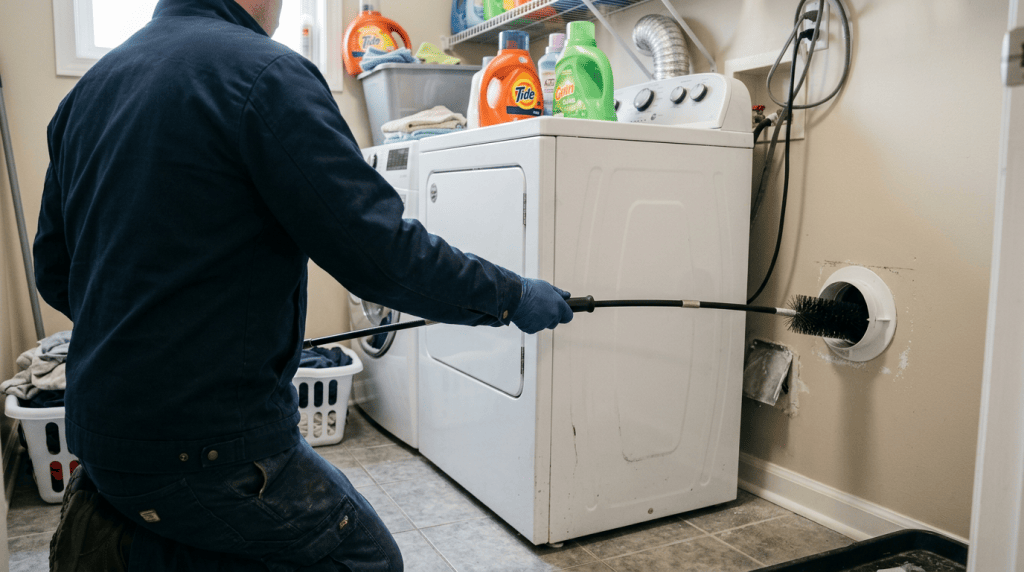
Check the vent before anything else. Step outside to where warm air exits your home and hold your hand near the vent opening during a running cycle. Airflow should be strong and steady. If it’s weak, intermittent, or absent, that blockage is your root cause. You can often clear lint from the exterior vent hood by hand or with a stiff brush. For ductwork clogged deeper inside the wall, professional cleaning is the safer option. We’ve put together a detailed walkthrough in our guide on how to clean your dryer vent safely—it covers both the exterior check and what to do when the clog is further in.
3. Heating Element
The heating element is the resistance coil that actually generates warmth inside the drum. With heavy use, the coil can develop a break and burn out entirely. If your thermal fuse tests intact and your vent is clear, a failed heating element is the next component to investigate. Replacement requires sourcing the correct element for your model and safely accessing the heater housing—work best left to a technician.
4. High-Limit Thermostat
This thermostat serves as a secondary safety cutoff. If the dryer approaches dangerous temperatures and the thermal fuse hasn’t yet blown, the high-limit thermostat steps in to interrupt heating. When this component fails in a closed position, it cuts heat even during a normal, safe cycle. Diagnosing a faulty high-limit thermostat requires a multimeter and knowledge of where the component is located on your specific model.
5. Cycling Thermostat
Unlike the high-limit thermostat, the cycling thermostat’s job is ongoing: it signals the heating element to turn on and off throughout the cycle to maintain a consistent drum temperature. A failed cycling thermostat can prevent the element from activating at all, leaving you with a cold drum from start to finish.
6. Electronic Control Board
Newer dryers rely on a circuit board to coordinate every function. A failed board can selectively disable the heating circuit while leaving the motor, display, and controls operating normally—making the fault difficult to identify without the right diagnostic tools. Control board replacement tends to be the most expensive repair on this list, so a technician should confirm the diagnosis before ordering parts.
Gas Dryer Not Heating: Diagnosis Steps
1. Confirm the Gas Supply Valve Is Open
Every gas dryer has a manual shut-off valve on the supply line feeding into the appliance. When the lever runs parallel to the pipe, gas is flowing. When it sits perpendicular, the supply is cut off. If someone recently moved the dryer or had gas line work done nearby, that valve may have been closed and not reopened. Check it first—it’s a thirty-second fix when it’s the cause.
2. Igniter Glows Orange but No Flame Follows
If you can observe the igniter heating to a bright orange glow but the burner never lights, the igniter itself is functioning. The failure point is almost certainly the gas valve solenoid coils. These coils open the valve to release gas once the igniter reaches ignition temperature. When the coils weaken or fail, the valve stays shut, the gas never flows, and the cycle runs cold. A technician needs to replace the solenoid coils or the valve assembly.
3. Igniter Doesn’t Glow At All
No glow indicates igniter failure. The igniter is essentially a resistance heating element—similar in principle to a stovetop element—and when it breaks, it produces no heat, which means no ignition. Replacing the igniter is a straightforward parts swap once the dryer is properly disassembled.
4. Thermal Fuse on Gas Dryers
Gas dryers carry thermal fuses just as electric models do, and the same logic applies: a blown fuse almost always points back to a venting problem. Inspect the vent thoroughly before replacing the fuse, or you risk a repeat failure within the same week.
5. Flame Sensor
Once the burner ignites, a flame sensor monitors the flame and signals the gas valve to stay open. If the sensor malfunctions, it may report that ignition never occurred—even when the flame is burning normally—causing the valve to close and cutting off heat mid-cycle. Erratic heating, where the dryer warms briefly then goes cold, is a classic symptom of a failing flame sensor.
The Vent: The Step You Cannot Skip
A clogged dryer vent is not a minor inconvenience—it is a documented residential fire hazard. Lint is highly combustible, and when it accumulates inside ductwork, it creates conditions where a single overheat event can ignite a wall fire. The U.S. Fire Administration attributes approximately 2,900 home clothes dryer fires per year to inadequate cleaning, and the pattern is the same in Canada.
If your thermal fuse has blown—on either an electric or a gas dryer—do not run the appliance again until the vent has been inspected and cleared. Replacing the fuse and continuing to operate the dryer with a blocked vent puts your home at risk. Our guide on how to clean your dryer vent includes step-by-step instructions and explains when a professional cleaning is necessary versus what you can handle yourself.
When to Call SureFit Appliance Services
If you’ve checked the breaker, confirmed the vent is clear, and heat still hasn’t returned, the fault lies inside the dryer itself. Thermal fuses, heating elements, igniters, solenoid coils, and control boards all require proper testing to confirm failure before parts are ordered—and safe replacement once the diagnosis is confirmed.
SureFit technicians bring decades of combined hands-on experience with every major dryer brand. We hold TSSA certification for gas appliances and carry no brand restrictions, meaning we service whatever dryer you own.
Our diagnostic fee is $85 + HST per appliance—$14 below the regional average. If you approve the repair, that diagnostic fee is waived completely. Every repair we perform is backed by a 90-day warranty on parts and labour.
Same-day appointments may be available. Emergency requests are reviewed before scheduling is confirmed.
Book your appointment online or call us directly at (647) 977-2626. We’ll have your dryer heating again.
Related Services
Need expert help?
If troubleshooting hasn't resolved the issue, same-day appointments may be available across Simcoe & York Region. TSSA-certified technicians handle gas and propane appliance work. Dryer Repair → | Book Online | (647) 977-2626
Need Appliance Help? Call SureFit Today
$85 + HST per appliance diagnostic fee — waived when you approve the repair. 90-day parts & labour warranty on every job.